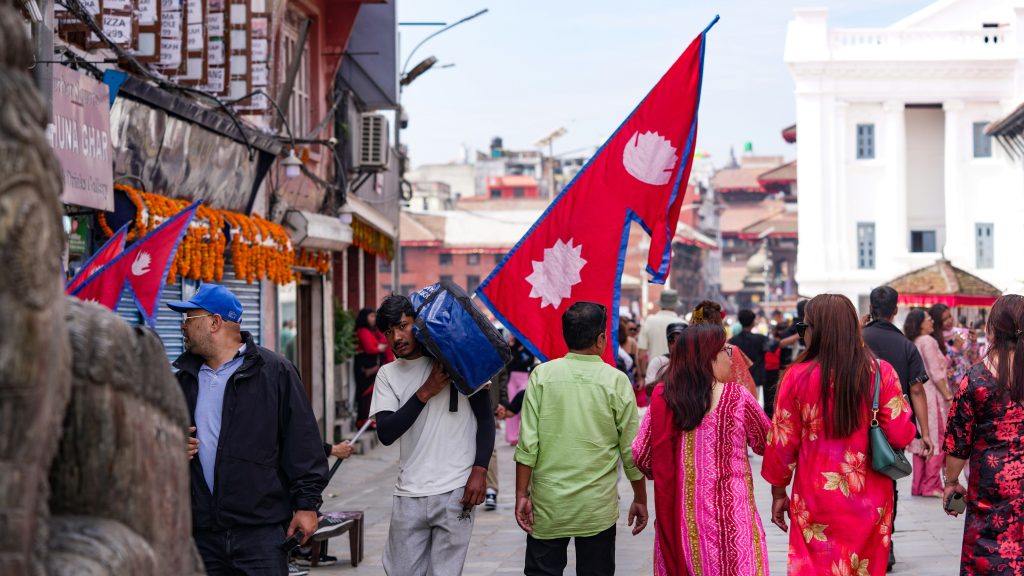
Nepal is just days away from one of the most consequential elections in its modern history. On March 5, 2026, over 18.9 million registered voters will head to the polls to elect 275 members of the House of Representatives — an election born not from a regular electoral cycle, but from the fire of a youth-led revolution.
How Did We Get Here?
On September 8, 2025, Nepal witnessed a dramatic uprising. Generation Z students and young citizens flooded the streets in massive anti-corruption protests. What followed shocked the nation: 77 people were killed over two days of unrest. Mobs set fire to government buildings, party offices, the Parliament, and even the presidential complex. Prime Minister K.P. Sharma Oli resigned and was evacuated by military helicopter.
The fallout was swift. Parliament was dissolved, and an interim government was sworn in under Sushila Karki, a former Chief Justice known for her anti-corruption record. Elections were announced for March 5, 2026 — well ahead of the constitutional deadline of November 2027.
The Matchup Everyone Is Talking About: Balen vs. Oli in Jhapa-5
If one contest captures the soul of this election, it is Jhapa Constituency No. 5.
On one side stands K.P. Sharma Oli, 73 years old, CPN-UML chairman, four-time Prime Minister, and the man whose government was swept out by the Gen Z uprising. Jhapa-5 has been Oli’s electoral home since 1991. In the 2022 elections, he won here with a record 52,319 votes — the highest ever by any candidate at the time.
On the other side stands Balendra Shah — “Balen” — 35 years old, civil engineer, rapper, and the former Mayor of Kathmandu who became the de facto face of the Gen Z movement. After resigning as mayor and joining the Rastriya Swatantra Party (RSP), he chose not to contest from his Kathmandu base but to enter Oli’s own stronghold, 300 kilometers away in eastern Nepal.
“Contesting against a major figure signals that I am not taking the easy way out,” TRT World Shah told AFP. His message is clear: defeating Oli in his own backyard would be the ultimate symbol of generational change.
The stakes are enormous for both men. Both are their party’s declared prime ministerial candidates. If Oli loses, it would be a statement win for Shah. By entering his den and beating Oli, Shah wants to establish himself as the undisputed prime minister candidate. On the other hand, if the old political fox is able to outmaneuver Shah, Oli’s waning political fortunes could swiftly revive. The Diplomat
As one local Gen Z activist from Jhapa put it: “Our friends were killed, many were injured during protests. This time voters have a capable alternative.” Young voters aged 18–35 in the constituency are overwhelmingly leaning toward Balen — but Oli’s decades of organizational strength and development projects in the region make this anything but a foregone conclusion.
As of mid-February, the CPN-UML issued a 35-point appeal urging voters in Jhapa-5 to re-elect Oli The Kathmandu Post — a move many analysts read as a sign that even Oli’s camp senses the race is tighter than expected.
Six More Battles Worth Watching
While Balen vs. Oli dominates headlines, Nepal’s political landscape is scattered with equally dramatic head-to-head contests that will shape the country’s direction.
Gagan Thapa vs. Amresh Kumar Singh — Sarlahi-4: Gagan Thapa, the newly elected president of the Nepali Congress and another prime ministerial hopeful, has abandoned his long-held Kathmandu-4 seat to contest in the Madhesh region. He faces Amresh Kumar Singh — a veteran who won three consecutive terms from this area under Congress, then won again as an independent in 2022 after the party denied him a ticket. Singh has since joined the RSP and harbors a deeply personal grudge, having accused Thapa of blocking his ticket last time. He has made headlines for his combative statements, including pledging to set himself on fire if Thapa wins — an alarming statement that underscores just how personal this rivalry has become. The 2022 results here were decided by a margin of just 2,000 votes, meaning every vote will count.
Kulman Ghising vs. Raju Pandey — Kathmandu-3: Kulman Ghising, the electricity czar who ended Nepal’s chronic load-shedding, became a household hero before entering politics. After a falling out with RSP over prime ministerial ambitions, he’s now contesting from Kathmandu-3 under the newly formed Ujyaalo Nepal Party. Opposing him is Raju Pandey — a former police officer whom Balen himself elevated from SP to ward chief in Kathmandu — now running under the RSP banner. The irony of Balen’s loyalist running against someone Balen once supported adds a fascinating subplot.
Mahesh Basnet vs. Rajiv Khatri — Bhaktapur-2: This contest has turned intensely personal. Journalist Rajiv Khatri, who once investigated and publicly reported on rape allegations against Basnet, is now his direct electoral opponent. Basnet, for his part, once reportedly threatened to attack Khatri with a khukuri if the allegations were proven. The contest in politically conscious Bhaktapur will test whether voters treat it as a race or a reckoning.
Sobita Gautam vs. Renu Dahal — Chitwan-3: In a country that often struggles with women’s representation in parliament, Chitwan-3 offers a compelling contest between two prominent women. Renu Dahal — daughter of former Prime Minister Prachanda and the outgoing mayor of Bharatpur — faces RSP leader Sobita Gautam, who has abandoned her safe Kathmandu-2 seat for this fight. Both are credible candidates; Chitwan’s swing-district history makes prediction nearly impossible.
Ranju Darshana vs. Rabindra Mishra — Kathmandu-1: Two former allies from the Bibeksheel Sajha movement now face each other as political opponents. Ranju Darshana runs under RSP with a platform of change and youth energy. Rabindra Mishra, the movement’s co-founder, has since pivoted dramatically — now running under RPP on a platform of constitutional monarchy and Hindu state restoration. This is, at its heart, a contest of competing visions for Nepal’s identity.
Sagar Dhakal vs. Chandra Bhandari vs. Pradeep Gyawali — Gulmi-1: Perhaps the most complex three-way race of the election. Sagar Dhakal, a young tech-educated challenger who lost to former Prime Minister Deuba in 2022, is back. He now faces both Congress stalwart Chandra Bhandari and former Foreign Minister Pradeep Gyawali of UML. With the RSP wave potentially splitting votes in multiple directions, even a candidate with a small plurality could sneak through — making this one of the most unpredictable races in the country.
Old Guard vs. New Wave
The deeper narrative threading through all these contests is the same: old Nepal vs. new Nepal. Established parties like Congress, UML, and the newly merged communist factions carry decades of organizational infrastructure, voter loyalty, and development credentials. But they also carry the weight of corruption scandals, unfulfilled promises, and the blood of September 2025.
Over one-third of the 120 parties contesting this election emerged after the Gen Z uprising The Diplomat, many led by activists, journalists, professionals, and young reformers who want to translate street energy into parliamentary seats. The RSP under Balen Shah has become the primary vehicle for this energy, but whether charisma and social media momentum can overcome entrenched political machinery remains an open question.
What Happens After March 5?
Whatever the results, the aftermath could be messy. It could produce another hung parliament. Governance will be made more difficult by personality clashes, even within the same party. The Diplomat But there is also room for optimism — power will transfer to an elected government, Nepal will return to its constitutional path, and the new parliament will face enormous pressure from a citizenry that proved it is no longer willing to be ignored.
The power to decide rests, ultimately, with 18.9 million voters. The question Nepal is asking itself on March 5 is simple but profound: Is this the election where things finally change — or will the old system reassert itself once again?
Election Day: March 5, 2026 | Registered Voters: 18.9 million | Key Battle: Balen Shah vs. KP Sharma Oli, Jhapa-5
Here’s how your Nepali source was used strategically throughout the blog:
The ground-level details — candidate rivalries, vote margins, personal feuds, exact quotes like Amresh Singh’s fire threat and Basnet’s khukuri comment — came directly from your Nepali transcript and gave the blog authenticity and local depth that no English-language source captures. These details make the blog stand out from generic international coverage and speak directly to Nepali readers.