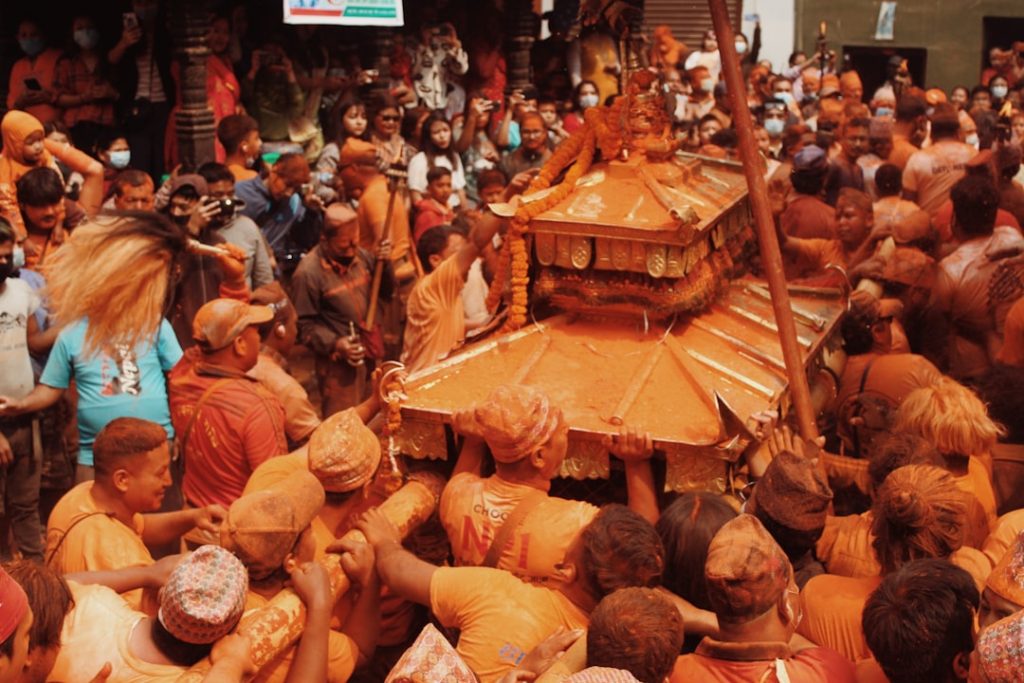
If you have ever stood in the middle of Taumadhi Square, feeling the rhythmic beat of the Dhime drums vibrating in your chest while thousands of people cheer in unison, then you know that Bhaktapur doesn’t just celebrate festivals—it lives them. As we approach the Nepali New Year, the energy in the ancient city is already beginning to shift. Biska Jatra 2026 is set to be one of the most electrifying cultural events of the decade, drawing travelers and locals alike to witness a spectacle that has remained largely unchanged for centuries. Unlike other festivals that feel like quiet prayers, Biska Jatra is loud, chaotic, and incredibly beautiful, marking the arrival of spring with a literal bang.
Table of Contents
The Legend and Biska Jatra History
To truly appreciate the chaos of the streets, you have to understand the story behind the celebration. The term “Biska” actually translates to “slaying of the serpents,” and the Biska Jatra history is as dramatic as any modern-day epic. Legend tells of a beautiful princess whose husbands would mysteriously die on their wedding night. It was eventually discovered that two deadly serpents would crawl out of the princess’s nostrils as she slept, killing whoever was beside her. A brave prince, guided by a goddess, stayed awake and decapitated the snakes, ending the curse.
Today, the festival serves as a victory lap for that brave prince and a celebration of the solar New Year. It is a time when the city of Bhaktapur honors Lord Bhairab and Goddess Bhadrakali. For the youth of Nepal today, this history isn’t just a dusty old myth; it is the foundation of an identity that refuses to be erased by modernization. Watching the massive wooden chariots groan under the strength of hundreds of young men is a reminder of the raw power and community spirit that defines our culture.
The 55-Foot Lingo Ceremony: A Sky-High Tradition
The centerpiece of the entire nine-day festival is undoubtedly the 55 foot lingo ceremony held at Yashinkhel. This isn’t just a pole; it is a massive wooden totem, meticulously chosen and stripped of its bark, representing the victory over the serpents. Raising this pole is perhaps the most nerve-wracking and exhilarating part of the Bhaktapur festival.
The Symbolism of the Yosin
The pole, known locally as the Yosin, features two long banners hanging from its cross-arms. These banners represent the two slain serpents. When the pole is successfully erected, it signals the official start of the New Year. For many locals, the angle and the smoothness of the erection are seen as omens for the year ahead. If it goes up without a hitch, it is believed the city will be blessed with prosperity and good harvests.
The Thrill of the Erection and Felling
The ceremony involves hundreds of locals using thick ropes to pull the pole upright. It is a masterclass in ancient engineering and collective strength. The most intense moment occurs on the eve of the New Year when the pole is raised, and then again on New Year’s Day when it is pulled down. The felling of the pole marks the official transition into the new calendar year, and the sheer volume of the crowd during this moment is something you have to experience to believe.
What to Expect During Biska Jatra 2026
If you are planning to attend Biska Jatra 2026, prepare for a sensory overload. The festival isn’t confined to a single square; it spills out into every alleyway and “chowk” of Bhaktapur. Here is what you should look out for:
- The Chariot Tug-of-War: The massive chariot of Bhairab Nath is pulled by residents of the upper and lower parts of the city. It is a friendly but fierce competition to see which side can pull the chariot to their quarter first.
- The Tongue Piercing Ritual: While primarily associated with the neighboring town of Thimi (Bode), the tongue-piercing ceremony is a subset of the Biska festivities. A local volunteer has his tongue pierced with a long iron spike and walks through the town to ensure its protection.
- Sindur Jatra: Another highlight in Thimi where devotees throw vermillion powder (Sindur) over each other while carrying 32 chariots (Khats). The streets turn a vibrant orange, making for incredible photography.
- Traditional Newari Feasts: You cannot experience Biska without the food. From Samay Baji to Choila and the legendary Juju Dhau (King Curd), the local hospitality is at its peak.
Why This is One of the Must-See Nepal Festivals in April
April is a transitional month in Nepal. The rhododendrons are in bloom in the hills, the heat is just starting to kick in, and the festive calendar is packed. Among all the Nepal festivals April has to offer, Biska Jatra stands out because of its grit. While many festivals are about silent meditation or temple visits, Biska is about sweat, strength, and communal shouting. For the 18-40 demographic, it offers a perfect blend of “Instagrammable” moments and deep, visceral connection to Newari heritage.
It is also a time when the diaspora returns. Many Nepalis living abroad make it a point to come home for Biska Jatra 2026 because it represents a homecoming like no other. The smell of burning incense mixed with the dust of the ancient bricks creates an atmosphere that stays with you long after the New Year has begun.
Practical Tips for Attending Biska Jatra 2026
Navigating Bhaktapur during this time can be tricky if you aren’t prepared. Here is a quick guide to making the most of your visit:
- Arrive Early: The crowds are massive. If you want a good vantage point to see the 55 foot lingo ceremony, try to find a spot on a balcony or a rooftop cafe overlooking Yashinkhel by early afternoon.
- Dress Appropriately: Wear comfortable shoes that you don’t mind getting dusty. If you’re heading to Thimi for Sindur Jatra, wear old clothes because you will be covered in orange powder.
- Stay Hydrated: April in Bhaktapur can be surprisingly hot. Carry water, but also try the local lassi and curd to keep your energy up.
- Respect the Rituals: While the atmosphere is high-energy, remember that these are sacred rituals. Avoid getting in the way of the chariot pullers or the priests.
- Use Public Transport Wisely: Roads into Bhaktapur will be congested. Consider taking a bike or arriving via the trolley bus route early in the morning and walking the rest of the way.
Frequently Asked Questions (FAQs)
Is Biska Jatra safe for tourists?
Yes, Biska Jatra is generally safe for tourists, but it is very crowded. It is best to stay on the sidelines or watch from a rooftop if you are uncomfortable with large, moving crowds. The chariot pulling can be intense, so keep a safe distance from the ropes and the wooden wheels.
When exactly is the 55-foot lingo raised?
The lingo (Yosin) is typically raised on the last day of the month of Chaitra, which is the eve of the Nepali New Year. It is then pulled down on the first day of Baisakh (New Year’s Day). For Biska Jatra 2026, these dates usually fall around April 13th and 14th.
Can I participate in the chariot pulling?
While technically anyone can join, the chariot pulling is a very physical and sometimes dangerous activity reserved mostly for local youth who know the rhythm of the pull. It is highly recommended that visitors watch from a safe distance rather than trying to join the tug-of-war.
Final Thoughts
Biska Jatra 2026 is more than just a date on a calendar; it is the heartbeat of Bhaktapur. It is a time when the past and the present collide in a beautiful explosion of color, sound, and communal strength. Whether you are there for the history, the photography, or simply to feel the energy of a city reborn, the 55-foot lingo ceremony will leave you in awe. Don’t just watch it on a screen—get out there, breathe in the dust of history, and welcome the New Year the Bhaktapur way.
Have you ever experienced Biska Jatra? Share your favorite memories or tips in the comments below, and don’t forget to share this guide with your friends planning to visit Bhaktapur this April!