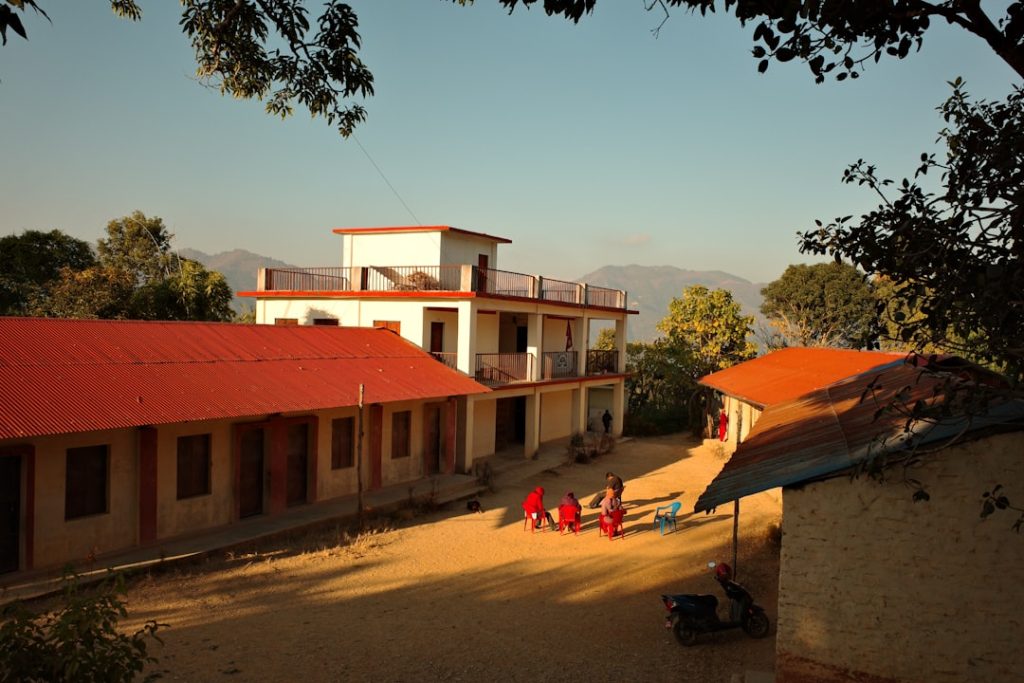
Walk through any street in Kathmandu, Pokhara, or Butwal at 8:30 AM, and you will see the same sight: thousands of students in neatly pressed uniforms, lugging heavy backpacks, rushing to beat the school bell. On the surface, it looks like a nation committed to progress. However, as we dig deeper into the current education system Nepal provides, a troubling question arises: Are our students actually learning, or are they just showing up? While enrollment rates have improved significantly over the decades, the quality of what happens inside those four walls remains a subject of intense debate among parents, educators, and the youth.
Table of Contents
The Paradox of High Attendance and Low Employability
For decades, the measure of success in the Nepali household has been the grade sheet. We have been conditioned to believe that a high GPA in the Secondary Education Examination (SEE) is the ultimate golden ticket. Yet, every year, when the SEE results Nepal are published, we see a recurring pattern: thousands of students pass with flying colors, but they often lack the basic critical thinking or technical skills required for the modern job market. We are producing graduates who can recite the definition of “Photosynthesis” verbatim but struggle to apply basic scientific principles to improve local farming.
This gap between academic “success” and real-world “competence” is the biggest hurdle facing the education system Nepal today. The focus has shifted so heavily toward attendance and rote memorization that the essence of learning—curiosity and application—has been pushed to the sidelines. When students spend more time worrying about the margins of their answer sheets than the logic of their arguments, the system is failing them.
Moving Beyond the “Ratta” Culture
If you grew up in Nepal, you are likely familiar with the term “ratta marne.” This culture of memorizing entire textbooks just to vomit the information onto an exam paper is deeply ingrained in our society. Unfortunately, traditional teaching methods Nepal still largely rely on the “chalk and talk” model. The teacher speaks, the student listens, and the textbook is treated as an infallible scripture.
In a world where Google can provide any fact in milliseconds, the ability to memorize a list of historical dates or chemical formulas is no longer a competitive advantage. What the 21st-century economy demands is the ability to analyze information, solve complex problems, and communicate effectively. By sticking to outdated teaching methods Nepal, we are essentially preparing our youth for a world that no longer exists. We need classrooms where students are encouraged to ask “Why?” and “How?” rather than just “What is the definition of…?”
The Need for Skill-Based Curriculum
One of the primary reasons for the massive “brain drain” in Nepal is the lack of confidence students feel in their own local education. Young people often feel that to get “real” skills, they must go to Australia, the USA, or Europe. To counter this, there must be a push for practical education Nepal can call its own. This means integrating vocational training, digital literacy, and financial management into the standard curriculum from an early age.
- Agriculture & Innovation: Since a large portion of our population depends on farming, why isn’t modern agricultural technology a core practical subject in rural schools?
- Digital Literacy: Coding and digital marketing shouldn’t be “extra” courses; they should be as fundamental as math and science.
- Soft Skills: Public speaking, emotional intelligence, and teamwork are often ignored but are the most sought-after traits by employers.
Why Educational Reform is Non-Negotiable
The call for educational reform is not just a political talking point; it is a necessity for national survival. As we move toward a more federalized structure, local governments have a unique opportunity to tailor their curricula to local needs. For instance, a school in the Solukhumbu region could focus more on tourism and mountain ecology, while a school in the Terai might focus on industrial management and large-scale agriculture.
True educational reform involves more than just changing the syllabus; it requires a complete overhaul of how we evaluate students. We need to move away from the high-stakes, once-a-year exam model and toward continuous assessment. When a student’s entire future depends on a three-hour exam, the pressure leads to anxiety and cheating rather than a genuine love for learning. Practical projects, internships, and community service should carry as much weight as written tests.
The Role of Technology in Practical Learning
The COVID-19 pandemic was a wake-up call for the education system Nepal. It showed us that we are woefully behind in digital infrastructure but also proved that we are capable of rapid change. However, “online classes” shouldn’t just mean a teacher reading a PDF over a Zoom call. Practical learning in the digital age means using simulations, virtual labs, and collaborative online platforms.
By leveraging technology, a student in a remote village in Mugu could theoretically access the same quality of practical education Nepal offers in its top-tier private schools in Kathmandu. This democratization of knowledge is the only way to ensure that the “new Nepal” is inclusive and meritocratic.
What We Can Do: A Guide for Parents and Students
While we wait for large-scale government changes, there are steps that the community—specifically the 18-40 demographic who are now becoming parents and educators—can take to bridge the gap.
- Encourage Hobbies as Skills: If your child is interested in photography, coding, or even gardening, don’t dismiss it as a distraction. These are practical skills that build discipline and creativity.
- Question the School: During parent-teacher meetings, ask about the “lab time” or “field visits” rather than just the marks. Demand to know how the school is implementing practical education Nepal standards.
- Self-Learning: For students and young professionals, don’t rely solely on your degree. Use platforms like Coursera, YouTube, or local workshops to gain the hands-on experience that the education system Nepal might be missing.
- Advocate for Internships: Encourage local businesses to take on high school interns. Exposure to a professional environment is often more educational than a month in a classroom.
Ultimately, the goal of education should be to create “job creators” rather than just “job seekers.” When we shift our focus from attendance to application, we empower the next generation to solve Nepal’s unique challenges using their own ingenuity.
Frequently Asked Questions (FAQ)
Why are the SEE results Nepal produces often criticized despite high pass rates?
The criticism stems from the “GPA inflation” where students score high marks through memorization but lack the practical skills or critical thinking required for higher education or the workforce. There is a perceived gap between what the certificate says and what the student can actually do.
What is the biggest challenge to implementing practical education Nepal faces?
The biggest challenges include a lack of infrastructure (like labs and high-speed internet), a shortage of trained teachers who understand modern teaching methods Nepal requires, and a societal obsession with traditional academic grades over vocational skills.
How can the education system Nepal be improved at the grassroots level?
Improvement starts with teacher training and empowering local school boards to introduce project-based learning. Reducing the emphasis on final exams and increasing the weight of practical assignments and community-based projects can also make a significant difference.
The journey toward a better education system Nepal is a long one, but it begins with a change in mindset. We must stop valuing students based on how well they can remember and start valuing them based on how well they can think. If we want a prosperous Nepal, we need to invest in a system that nurtures doers, thinkers, and innovators. What do you think is the biggest flaw in our current schooling? Share your thoughts in the comments below and let’s start a conversation about our future!